BigHomie
kdogg
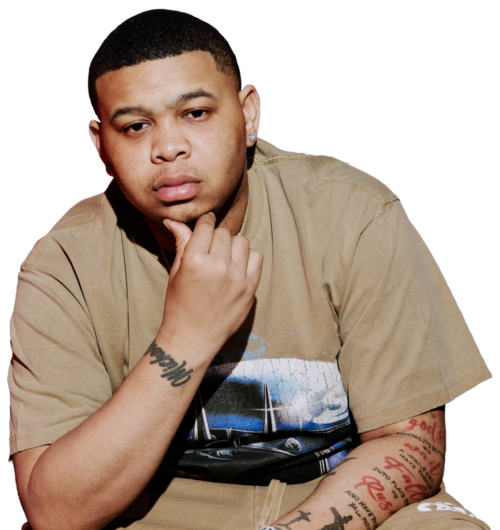

At just seventeen, K-Dogg moves with the urgency of someone who already knows his destiny.
Born Markalon Lewis and raised in Memphis, Tennessee, he has been calling his shot since he could barely form sentences. “I been saying I wanted to do music when I was a toddler. When I really started focusing on it, I was about 15. That’s when I shot my first video. But my first song? About 12.”
Before he could legally drive, he was already building a reputation. By his sophomore year of high school, K-Dogg was buzzing through Memphis strictly off word of mouth. No label. No marketing budget. Just raw delivery and street credibility. His first video pulled in over 60,000 views organically, turning him into a local celebrity almost overnight.
But his story did not follow a straight line. It took detours. Hard lessons. Consequences.
At sixteen, a run-in with the law landed him in juvenile hall. Even there, the music followed him. A friend inside started spreading the word that K-Dogg was one of the hardest young rappers in Memphis. Soon, the entire facility wanted proof.
K-Dogg, already aware of his value, refused to perform for free.
“I ain’t rapping for free. Y’all wanna hear me, y’all gotta pay me.”
They paid in commissary snacks. A makeshift stage. A captive audience. And a verse so powerful it would later become “First Day Out.”
When he was released, he recorded and shot the official version immediately. The video dropped with the energy of a statement: he was back, and he was not apologizing for his ambition.
The setbacks kept stacking before the breakthrough. Getting kicked off his high school football team. Being sent to an alternative school. That time behind detention walls. But instead of breaking him, it refined him.
“That’s what made me get stronger. Made me be wiser. Made me think about everything. Like, I gotta get my life together and focus on rap.”
And he did.
His next major single, “Django,” generated even louder buzz in Memphis, racking up tens of thousands of YouTube views and cementing his commitment to music full-time. The streets had once pulled him off course, but now they fueled his hunger.
Timing is everything, and Memphis is having a moment. The city that raised him is once again commanding national attention. While he respects the legends who paved the way, including Yo Gotti, K-Dogg speaks with the conviction of someone who believes he should already be there.
“I feel like I’m supposed to been on. I’m supposed to been in the door. Them little losses we took stopped me from where I’m supposed to be. I’m supposed to be all the way up there.”
That belief is not arrogance. It is survival instinct sharpened into focus.
“I ain’t talking down on no artists, but I feel like I’m harder than some of them artists.”
When asked about legacy, his answer is immediate and unapologetic.
“I want them to label me as
the Prince of Memphis.”
And the industry has taken notice.
Memphis heavyweight Drumma Boy, the hitmaker behind records for Gucci Mane, Young Jeezy, and 2 Chainz, has officially signed K-Dogg to Drum Squad Records. Drumma Boy also produced K-Dogg’s latest single, “No Turning Back,” a fitting title for an artist who has already decided there is no alternate ending to his story.
Despite the co-signs, the views, and the rising momentum, K-Dogg stays rooted in the people who matter most.
“Man, my friends. My family. They influence me to keep going with it. I can help change people’s lives with this, if I keep doing what I do.”
He is not chasing fame for the spotlight alone. He is chasing elevation. For himself. For his circle. For Memphis.
Seventeen years old. Tested. Focused. Signed. Hungry.
The throne is not a dream to him.
It is a destination.
videos